A fast pace packs in more cities with shorter stays at each stop. A mix of art & culture, family friendly, and nature. Mostly low-effort and walkable, mostly at your own pace. Includes 3 must-see landmarks.
Highlights: Gyeongbokgung Palace & Hanbok Experience, Bulguksa Temple — UNESCO World Heritage, Seongsan Ilchulbong Sunrise Peak — UNESCO, Haedong Yonggungsa — Seaside Buddhist Temple, Hallasan National Park Summit Hike
The fast pace packs in more cities and activities — ideal if you want to see as much as possible in 14 days.
Your Route — ordered to minimize backtracking
26+ activities scored and ranked · route optimized across 4 cities
Day-by-Day Schedule — heavy and light days alternate so you don’t burn out
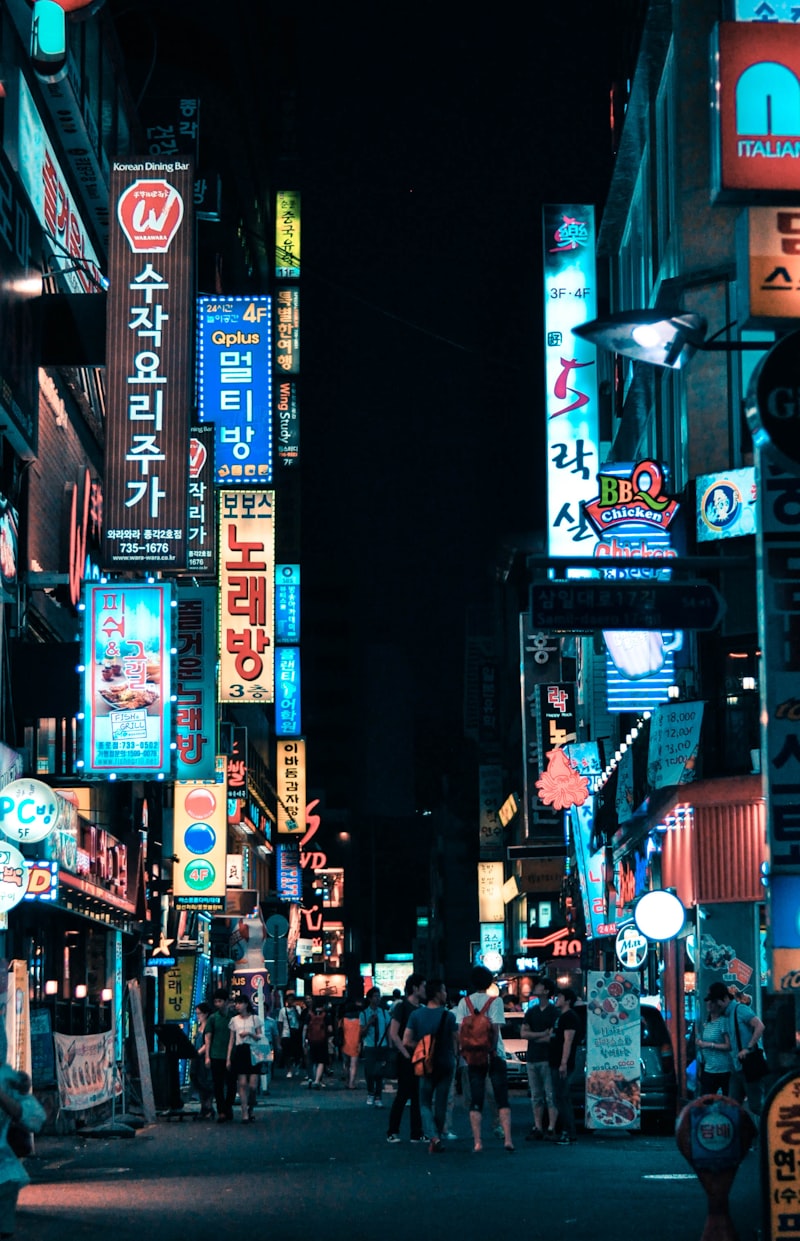
Seoul
SeoulA free day to explore Seoul's neighborhoods, cafés, and hidden gems at your own pace

Grill galbi and samgyeopsal at a Mapo-gu table, then follow with milky makgeolli rice wine and pajeon pancakes (3h)
$25 Year-round; evening dining. Mapo KBBQ street is liveliest Thursday–Saturday. Restaurants are typically very busy after 7pm — arrive early or expect queues. 📍 MapMyeongdong / Jongno / Hongdae

Walk Seoul's grandest Joseon palace and watch the Royal Guard ceremony at 10am and 2pm (3h)
$2 Verified Apr 2026 Open year-round; spring cherry blossoms (late March–April) and autumn foliage (October) are peak. Palace closed Tuesdays. 📍 MapWalk the hillside lanes of Seoul's best-preserved hanok neighborhood between two royal palaces (1.5-2h)
Open year-round; autumn foliage (October) and spring (April) are most scenic. Tourist access restricted to 10am–5pm since January 2025. 📍 MapMyeongdong / Jongno / Hongdae
Tour Seoul's best-preserved UNESCO palace and its guided 78-acre forest garden (2.5-3h)
$6 Verified Apr 2026 Open year-round (closed Mondays). Secret Garden is most spectacular in October when autumn foliage peaks; spring (April–May) brings cherry blossoms and cultural events. 📍 MapEat bindaetteok, mayak gimbap, and yukhoe at Seoul's oldest covered food market (1.5-2h)
$10 Verified Apr 2026 Open year-round; spring and autumn most comfortable for an outdoor-adjacent market. Most stalls quietest on Mondays and Sundays. 📍 MapMyeongdong / Jongno / Hongdae
Join a guided full-day tour of the Korean Demilitarized Zone — one of the world's most charged borders (8h)
$50 Verified Apr 2026 Tours run year-round (closed Mondays and national holidays). Spring and autumn are most comfortable for standing at outdoor observation points. 📍 Map
Ascend Namsan for 360-degree city views from the observatory — best at sunset (2h)
$15 Verified Apr 2026 Open year-round; spring cherry blossoms and autumn foliage on Namsan's trails are exceptional. Clear winter days also give superb long-distance views. 📍 MapMyeongdong / Jongno / Hongdae

Browse hanji craft shops, traditional tea houses, and the Ssamziegil courtyard in Jongno (1.5-2h)
Year-round. Most atmospheric on weekends when the street goes pedestrian-only and vendors set up stalls. 📍 MapTour Zaha Hadid's fluid silver landmark and browse the Dongdaemun fashion district at night (2h)
Year-round; DDP outdoor light installations are more compelling in the cooler months (Oct–Mar). Indoor exhibitions run Tuesday–Sunday (closed Monday). 📍 MapMyeongdong / Jongno / Hongdae

Make kimchi, bibimbap, and bulgogi in a small-group class with a local chef (3h)
$58 Verified Apr 2026 Year-round; classes run Tuesday–Sunday at most providers. Book at least 24 hours in advance. 📍 MapBrowse K-beauty flagships and street food stalls in Seoul's busiest pedestrian shopping district (2h)
Year-round; most lively on weekday evenings and weekends. Night market stalls set up from 5pm daily. 📍 MapMyeongdong / Jongno / Hongdae
Visit Seoul's most important Buddhist temple, free to enter and especially vivid during the Lotus Lantern Festival (1-1.5h)
Open year-round and free to enter. Peak season is late April–early May for the Lotus Lantern Festival (Yeondeunghoe) when thousands of lanterns decorate the grounds. 📍 MapVisit Seoul's affluent Gangnam district and ascend the world's fifth-tallest tower for vertiginous views (2-3h)
$22 Verified Apr 2026 Year-round; clear autumn and winter days give the best long-distance visibility from the observatory. 📍 MapMyeongdong / Jongno / Hongdae
Busan
BusanDescend a cliff-side path to one of Korea's only coastal Buddhist temples, with pagodas above crashing East Sea waves (1.5–2h)
Year-round; spring cherry blossoms and the Buddha's Birthday lantern festival (April) are exceptional. Summer is hottest and most crowded. 📍 MapWalk South Korea's most famous urban beach — 1.5km of golden sand backed by a luxury hotel skyline (2h)
Year-round for beach walks; swimming season July–August. Sand Festival in June, BIFF in October make shoulder seasons lively. 📍 MapHaeundae / Gwangalli / Seomyeon
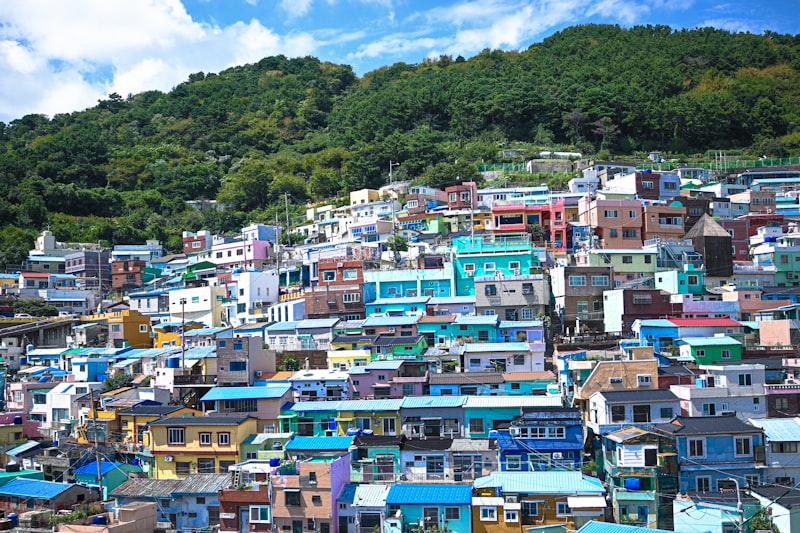
Climb Busan's pastel hillside art village — rainbow alleyways, murals, the iconic Little Prince viewpoint, and a ₩2,000 stamp trail map (2h)
Year-round; spring and autumn are ideal for the steep hillside walk. Summer (July–August) is very humid and busy — go early morning. 📍 MapWatch Busan's 7.4km suspension bridge glow at night from craft-beer bars and indie cafés along the beachfront (2h)
Year-round; October Fireworks Festival is spectacular. Best evening ambiance in spring and autumn when temperatures are comfortable for outdoor dining. 📍 MapHaeundae / Gwangalli / Seomyeon
Gyeongju
GyeongjuExplore Korea's supreme Silla-era Buddhist temple — seven National Treasures, twin pagodas, and a forested mountain setting (2–3h)
Year-round; cherry blossoms in April and crimson maples in October–November make for the most spectacular visits. 📍 MapWalk among 23 grassy Silla royal burial mounds in the city center — enter the open Cheonmachong tomb (1–1.5h)
$2 Year-round; cherry blossoms in April and autumn foliage in October make the park especially picturesque. 📍 MapGyeongju Downtown / Bomun Lake Resort
Hike to a pine-forested mountain peak to see a 3.5-meter 8th-century granite Buddha gazing over the East Sea (2h)
Year-round; forest walk is most beautiful in spring (cherry blossoms) and autumn (foliage). Pair with Bulguksa on the same morning. 📍 MapWatch illuminated Silla palace pavilions reflect perfectly in Wolji Pond at dusk — Gyeongju's most romantic night scene (1–1.5h)
$2 Year-round; illuminations are most magical on calm nights when the pond surface is still. Visit at dusk to catch the sunset-to-illumination transition. 📍 MapGyeongju Downtown / Bomun Lake Resort
Jeju Island
Jeju Island
Climb a UNESCO volcanic tuff cone at sunrise — 20-minute hike to a dramatic crater bowl above the ocean (1.5–2h)
$4 Year-round; best sunrise experiences in spring and autumn with clearer skies. Summer humidity reduces visibility and draws the largest crowds. 📍 MapWalk 1km inside one of the world's finest lava tubes — arched tunnels, lava stalactites, and a world-record 7.6m lava column (1h)
$3 Year-round; interior stays at a constant 11°C making it an especially welcome stop in hot summer months. Verify reopening status after 2026 maintenance. 📍 MapJeju City / Seogwipo / Aewol

Conquer South Korea's highest peak via a free, reservation-required trail to the summit crater lake (full day)
Year-round but summit can be snow-covered and icy in winter. Best in spring and autumn for clear summit views and comfortable temperatures. 📍 MapSwim at Jeju's most beautiful white sand beach, then take a 15-minute ferry to the tiny volcanic Biyangdo island (2–3h)
Year-round for beach walks; swimming season June–September. Ferry to Biyangdo can be suspended in bad weather — check before visiting. 📍 MapJeju City / Seogwipo / Aewol
Where You’ll Stay
Estimated total: $800–$1,200
Trip Budget Estimate
Estimates based on listed activity prices and hotel rates. Actual costs vary by season, availability, and personal spending.
Typical range for South Korea
$840 – $4,900 per person for 14 days
Similar Destinations
Similar vibes, fewer crowds — destinations our algorithm rates as close matches to South Korea.
🧳 Practical Info for South Korea
- Visa
- K-ETA required for most visa-exempt nationalities (US, UK, CA, AU). Apply online before travel. 90-day stay.
- Tipping
- Not customary and not expected. Service charge may be included at upscale restaurants.
- Currency
- South Korean Won (₩ KRW). Cards and mobile payments accepted almost everywhere. T-money card for transit.
- Power
- 220V, Type C/F plugs. US travelers need an adapter and possibly a voltage converter.
- Connectivity
- Among the fastest internet in the world. Free WiFi widespread. SIM/eSIM at Incheon Airport.
- Emergency
- 112 (police), 119 (fire/ambulance)
🚄 Getting Around South Korea
KTX high-speed trains connect Seoul to Busan (2.5h) and Gyeongju. Korea Rail Pass available for tourists.
Seoul's subway is one of the world's best — clean, signed in English. Use T-money card.
Express buses connect all cities via modern terminals. Book on kobus.co.kr.
Frequently Asked Questions
Is South Korea expensive?
Moderate — cheaper than Japan for food and transport. Budget $70-100/day. Street food is excellent and cheap ($2-5 per meal). T-money cards cover all public transit.
What is the best time to visit South Korea?
September-November for fall foliage and pleasant weather. Spring (April-May) for cherry blossoms. Summer is hot and rainy (monsoon season June-August).
Do I need a visa for South Korea?
K-ETA (Korea Electronic Travel Authorization) required for most visa-exempt nationalities. Apply online before travel.
Explore Similar Trips
Similar in Asia & Pacific